Vol. 76, October 2026
Have you published something new in Global Urban History? Are you hosting a conference, workshop, or event? We'd like our members to know!
GUHP is a member-supported organization.
| It's a very exciting season at the Global Urban History Project!
1) The deadline for Presentation proposals for GUHP3 Mexico has been extended to Monday, November 2 at 11:59 UTC.
2) GUHP Board member Ademide Adelusi-Adeluyi is the inaugural winner of the prestigious new Alison Isenberg Prize for best book in Urban Placemaking for her book Imagining Lagos.
3) And today we highlight no less than four recent books authored by GUHP members on Mexico City ... where we hope to see as many of you as possible next June! | Call for Papers for GUHP3 Mexico: Layered Cities
and
Call for Applications for the 2026-27 Cohort of GUHP Emerging Scholars
Deadline Extended to Monday, November 2, 2026 | GUHP is very excited to invite scholars to propose presentations for our third in-person conference, GUHP3 Mexico City with the theme Layered Cities: Scale and Time in Global Urban History. The conference will take place on June 21-22, 2027 at the Instituto de Investigaciones Históricas at UNAM in Mexico City.
In addition we are also pleased to welcome new applications for the 2026-27 cohort of the GUHP Emerging Scholars Program, which is designed to prepare early career scholars for high-impact participation in the conference.
The deadline for applications is Monday, November 2 At 11:59 UTC.
Information on applications can be found here. | Alison Isenberg Prize for Best Book on Urban Placemaking | 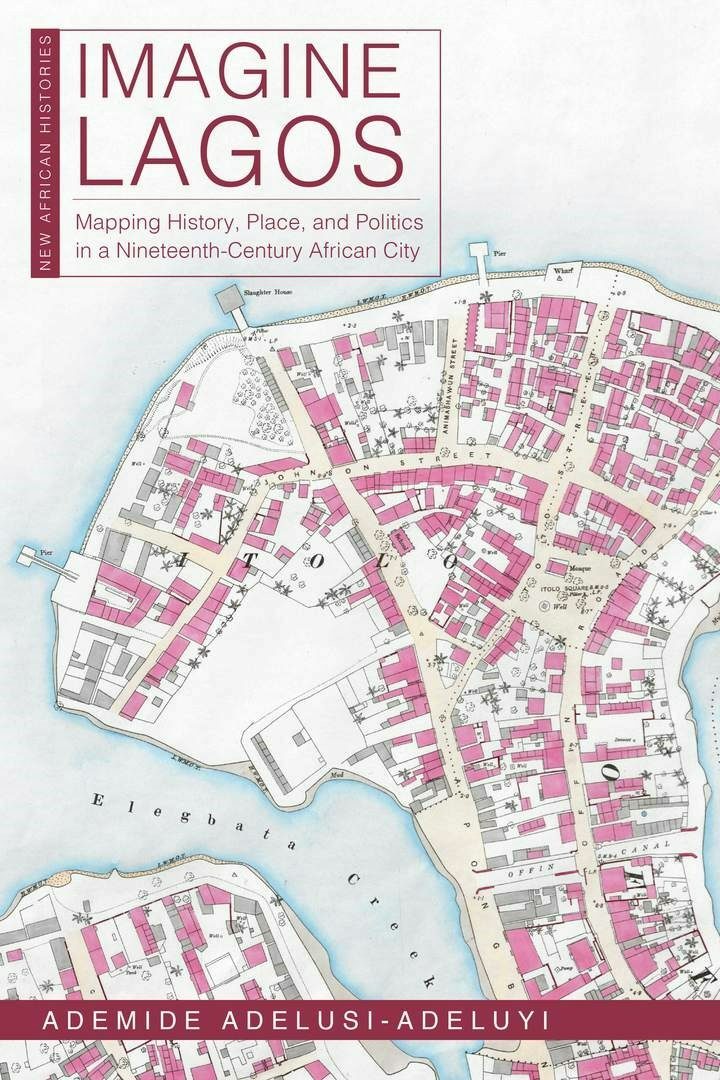 | | Imagine Lagos: Mapping History, Place, and Politics in a Nineteenth-Century African City
By Ademide Adelusi-Adeluyi
(Ohio University Press, 2024)
Imagine Lagos is an apt title for a book that expands historical methodology by an inventive approach to understanding the spatial elements of Lagos in the mid-19th century as the city moved from indigenous to British control. Ademide Adelusi-Adeluyi starts with historical maps but travels far beyond them to construct the lived experience of the city for indigenous Lagosians and their colonial captors. Utilizing insights from postcolonial theory, Adelusi-Adeluyi recognizes what maps offer and what they don’t: they can corroborate or contradict other sources and, ultimately, suggest ways space was used. What she adds, though, is present-day walking through the city with accumulated historical data, reconstructing the lost built environment by “walking cartography,” as she calls it. With this layered, physical, living approach to the past, she sees themes of memory, violence, and justice that were as much a part of place-making as buildings and infrastructure, thereby evoking people often absent in the historical record. Changing street names, shorelines, and the ruins of the 1851 British naval bombardment become questions of ownership and belonging. Adelusi-Adeluyi also creates maps that become arguments by layering historical data from land grants, letters, almanacs, newspapers, court testimonies, recollections, atop contemporary satellite maps. Since no maps survive of 1860s Lagos, for instance, recreation of one from these multiple sources situates indigenous Lagosians in their narrow, crooked streets with their variety of street names in place, soon to be converted to Yoruba names, tarred surfaces, wider and straighter paths of a colonial city. (The maps, images, and texts live on digitally for further analysis and use at imaginelagos.com.) The result is a book of bold imagination, not content to mark absence in the historical record but to create a material, spatial, and affective tie between past and present. Adelusi-Adeluyi’s work is a major contribution to urban history and to the study of place-making.
The prize announcement is [Here]. | | | | The Politics of Informality: Housing and Planning in Mexico City
By Emilio de Antuñano
(University of Texas Press, 2026)
The Politics of Informality is an illuminating political and intellectual history, examining how these neighborhoods have figured in Mexican life and in the ideologies underlying urban planning. Prior to the Mexican Revolution of 1910, urban experts saw Mexico City as a tidy modern capital in-waiting. But during the interwar period, informal neighborhoods boomed, as working-class families asserted claims to housing under the revolution’s framework of citizenship and social justice. Then, amid Cold War realignments, a new cohort of urban experts pathologized Mexico City, turning it into a transnational laboratory for the study of poverty, migration, and overpopulation. Tracing a fascinating evolution, The Politics of Informality underscores the stubborn opposition between technocratic modernism and revolutionary, extralegal politics.
| | | | EL DESIERTO LACUSTRE. HISTORIA HIDROPOLÍTICA DE LA DESECACIÓN DEL VALLE DE MÉXICO
Autor: Sergio Miranda Pacheco
(Universidad Nacional Autónoma de México, Instituto de Investigaciones Históricas, 2026)
La transformación de lagos en ciudades —desde la Roma imperial hasta el México moderno— ha generado crisis ambientales y sociales. En El desierto lacustre. Historia hidropolítica de la desecación del Valle de México se analiza la desecación de esta zona como un proceso conflictivo y evolutivo entre sociedad y naturaleza, impulsado por intereses políticos, económicos y científicos, que agravó un cambio geológico en marcha.
| | |  | | American Metropolis: The Making of Mexico City
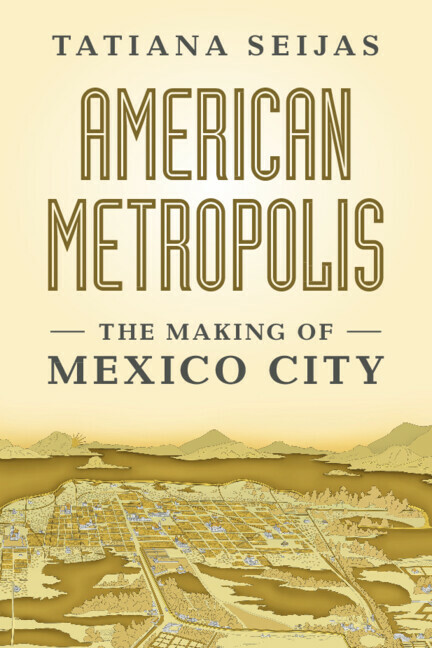
By Tatiana Seijas
(Cambridge University Press, 2026)
Mexico City was America's largest city in the seventeenth century – a genuine metropolis. In this deeply researched book, Tatiana Seijas reveals a rich tapestry of stories about essential workers who remade and transformed the city during this period. Her narrative style carries readers to a unique place and time with residents from around the world who sold food, facilitated transportation, provided care, and valued the city's silver. Free and enslaved people from Africa and Asia, immigrants, and Native Americans pursued opportunities in a wealthy, yet deeply unequal environment, where working people claimed parts of the city for themselves. They carved out spaces to create new businesses and protect their livelihoods, altering the cityscape itself in the process. American Metropolis brings Mexico City to life from the perspective of the working people who transformed this early modern metropolis.
| | | | A City on a Lake: Urban Political Ecology and the Growth of Mexico City
By Matthew Vitz
(Duke University Press, 2018)
In A City on a Lake Matthew Vitz tracks the environmental and political history of Mexico City and explains its transformation from a forested, water-rich environment into a smog-infested megacity plagued by environmental problems and social inequality. Vitz shows how Mexico City's unequal urbanization and environmental decline stemmed from numerous scientific and social disputes over water policy, housing, forestry, and sanitary engineering. From the prerevolutionary efforts to create a hygienic city supportive of capitalist growth, through revolutionary demands for a more democratic distribution of resources, to the mid-twentieth-century emergence of a technocratic bureaucracy that served the interests of urban elites, Mexico City's environmental history helps us better understand how urban power has been exercised, reproduced, and challenged throughout Latin America.
| | |  | Who destroyed Chinatown? Who preserved Chinatown? Confronting erasure and gentrification in North American Chinatowns
By Domenic Vitiello and Arthur Acolin
Planning Perspectives (August 2026)
Activists in the United States and Canada have recently sounded the alarm that North America’s downtown Chinatowns are under threat. This is just the latest chapter in a long history of being targeted for erasure and redevelopment. But what parts of these dynamics are new? And what does it even mean to destroy or preserve Chinatowns? To understand the continuities and changes in this history, it is vital to parse the different actors involved, including in efforts to protect and rebuild the neighbourhood. This reveals some issues particular to Chinatowns, but also others shared with many working-class communities of colour in planning history and cities today. In this article, we trace the actors engaged in more and less explicit efforts to destroy Chinatowns and in defending and preserving them since their formation in the late nineteenth century. The diversity of public, private, and civil society actors involved illuminates the ambiguous, contested, and shifting meanings of Chinatowns’ destruction and preservation over the long term.
| | | | The Military Spatial Complex: A Framework of Neoliberal Urban Power Relations
By Gabriel Schwake
Urban Studies (August 2026)
This paper develops the concept of the military–spatial complex (MSC) to analyze how armed forces increasingly shape neoliberal urban development. While military urbanism has often been studied through the visible apparatus of surveillance and security, the MSC highlights subtler forms of militarization: the embedding of martial authority into civilian urban life through planning, land governance, and property development. Correspondingly, this paper argues that militaries today operate as hybrid actors, part sovereign apparatus, part market developer, transforming their privileged access to land and resources into mechanisms of accumulation and control. Drawing on Israel, Egypt, and Serbia, the paper demonstrates how the MSC operates across different political economies and institutional configurations.
| | | | WORKSHOP INVITATION: Historical Flows, Digital Tools: Digital Humanities and the Respatialization of History
University of Neuchatel
October 30, 2026
Since the 2000s, spatial history has increasingly been associated with GIS-driven, data-intensive research. In the context of our FNS project, Sea-Border and Air-Space Formation in the Interwar Middle East: A Trans-Imperial Perspective, we aim to study the formation and effects of interwar maritime and airspace borders. By constructing a database that assembles underutilized archives, such as sea and air travel tickets and cargo manifests, we aim to analyze the evolution of maritime and air circulation of people and goods through ports and airports.
| | | | IRS Lecture by Johan Lagae: "The threat is in fluidity." On water management, urban sanitation and racial segregation in colonial Congo
Hybrid event: Zoom or at IRS Institute
October 21, 2026, 3.30–5.00 pm CEST
In this lecture, Johan Lagae will discuss practices of water management and sanitation in two cities in colonial Congo, exploring how these were intimately entangled with policies of racial spatial segregation: the port city of Matadi, which was central to the colonial mise-en-valeur (exploitation) of Congo; and Coquilhatville (today’s Mbandaka), the provincial capital of the Équateur province.
| | | | Housing of the Present, Housing of the Future: Architecture, Society, Technology and the Changing Conditions of Dwelling
Lviv, Ukraine
April 9-11, 2027
It has been almost a century since CIAM’s Athens Charter laid a roadmap for housing development that we largely follow to this day. At the scale of an urban apartment block, architects still operate in the paradigms invented in the 20th century, even if we have revised a few. At the same time, the reality of climate change, growing pollutant awareness, aging population, labor shortages, new technologies, and generally changing social structures are all breaking the validity of normative in residential architecture. Now is the time to assess how we build, live in cities and in our buildings, and how the future of urban living should evolve. The old theories of what makes good residential architecture no longer stand.
Proposal Due: October 31, 2026 | | | | LSA 2027 - The 11th Annual LSA Conference: (Re)generation in African Studies: Scholarship, Pedagogy, and Activism
Lagos, Nigeria
June 15-19, 2027
We invite participants to reflect on what (re)generation means in the diverse and diversely located fields of African studies. We encourage presentations that reflect on how shifting questions and practices (or epistemological, pedagogical, ideological crises) serve as a force of (re)generation in African studies. We welcome submissions that grapple with (re)generation as the propellant of new ways of knowing, of intellectual activism, and of a new beginning, that draws inspiration from the old or the past.
Abstract Deadline: December 1, 2026 | | | | 2027 Global Asias Summer Institute — “Global Asias’ Cold War: Cartographies of Intimacy”
Pennsylvania, USA
June 14-18, 2027
The 2027 Global Asias Summer Institute will be held June 14-18, 2027. SI2027, co-directed by Shuang Shen, Jooyeon Rhee, and Tina Chen, adopts Global Asias’ approach of “relational nonalignment” to consider the previously invisible, forcefully concealed, less studied, yet culturally far-reaching sites of coordination and connection in the histories of Cold War at the intersection of imperialist expansion and domination, postcolonial nationalism, migration, and diaspora. Institute participants spend a week reading and thinking about the annual theme, as well as significant time workshopping their work in progress.
Application Deadline: November 6, 2026 | | | | EURA 2027 Conference: "Centres, Margins and the Future of Territory: Reconfiguring Urban Governance"
Aveiro, Portugal
June 17-19 2027
The EURA 2027 international conference will mark the 30th anniversary of the European Urban Research Association. Hosted by the University of Aveiro and co-organised with the University of Palermo, the conference will invite critical reflection on the spatial reconfiguration of power, governance and meaning, with particular attention to the relations between centres and margins, territorial inequalities, marginalisation, rescaling and the future of urban and regional studies.
Call for papers and pre-organised panels will be announced soon.
More information will be available soon on the official EURA 2027 conference website! | | | Calls for Papers, Proposals & Panelists | CFP: Global Digital Humanities Symposium 2027
2027 World Congress of Sociology
Michigan, USA (and Virtual)
July 4-10, 2027
The 12th Global Digital Humanities Symposium is delighted to return, with events across countries and modalities in mid-May 2027. Michigan State University continues as host and is partnering with the University of Guelph, Ontario, Canada, as a lead into their annual DH@Guelph Summer Workshops.
We invite work at the intersections of critical DH that engages with anti-colonial and post-colonial frameworks, supports feminist and anti-racist praxis, and crosses political and disciplinary borders. We define the term “humanities” expansively to create space for a range of issues that encourage interdisciplinary understandings of the field.
Deadline for Proposal Submissions: Wednesday, November 18, 2026
| CFP: Liberalism, Blackness, and Labor Regimes In Post-Slavery Worlds
2027 World Congress of Sociology
Gwangju, Korea
July 4-10, 2027
The abolition of racial slavery in the nineteenth century aligned with universal liberal norms of human freedom and equality but did not merely fulfill those norms. Processes of slaves’ emancipation resulted instead in the reconstitution of racial hierarchies and subjugation constraining or impeding the self-determination of newly freed or colonized Black populations. The labor contract and production systems it structured within globalizing capitalism were key sites of renewed racialized domination to the extent that, when applied to blackness, laboring status was shaped by institutions that prevented actual political citizenship and social inclusion. Liberal ideas and modes of governance were therefore adapted to the task of combining normative universality with practical modalities of racial domination. Blackness thus confronted what Saidiya Hartman called “the afterlife of slavery.” This session will discuss the continuing subordination of formerly enslaved and newly colonized Black and Afro-descended populations within the labor regimes—intended as articulations of employment systems, accumulation patterns, laws, and ideas—of the post-abolition world. The session will also focus on how governments, experts, and social actors conceptualized, enforced, and institutionalized the racial subordination of post-slavery blackness in settler colonialism and evolving modalities of plantation or extractive capitalism.
| CFP: World History Association’s 2027 Annual Conference "Living in Interesting Times: Inflection Points in World History"
Pittsburgh, Pennsylvania, USA
June 27-29, 2027
The World History Association’s 2027 Annual Conference in Pittsburgh, Pennsylvania, USA will be organized around the theme of inflection points past and present. Inflection points help us to conceptualize the movement from one historical state to another: the neolithic or agricultural revolution, the development of the bureaucratic state, the rise of industrialization. Every inflection point exists in reference to a defined scale and scope of historical analysis. Some signal epistemic shifts, such as the development of writing, the Chinese civil service exam, or the printing press. Others mark pivots in transregional power, such as the decline of classical empires or World War II. Still others emerge through interdisciplinary research and allow us to theorize significant climate-influenced developments, such as the depopulation of Classical Maya highland cities or the rise of the Dutch maritime empire. Those of most relevance to world history represent interrelated shifts that reverberate across and between societies. Some posited inflection points may be mirages, or more limited than proposed, but often they do mark unfolding sequences of interconnected changes. Discussing and debating them can help us to understand the world in which we live.
Deadline for Proposal Submissions: Monday, October 19, 2026
| CFP: Seeking World History Scholars for The Bloomsbury Handbook of Transecology
A decade after Nicole Seymour's chapter “Trans Ecology and the Transgender Road Narrative” in The Oxford Handbook of Ecocriticism, following Susan Stryker’s foreword to the 2020 book Transecology: Transgender Perspectives on Environment and Nature, and after TSQ: Transgender Studies Quarterly’s November 2024 issue on trans* ecologies, which built on the Queer and Trans* Ecologies (QTE) Interdisciplinary Initiative symposium that drew more than six hundred participants, transecology as a field needs a comprehensive reference handbook. The Bloomsbury Handbook of Transecology will be the first such volume: covering 38 topics, organized across four sections moving outward in scale from the molecular body to the deep-time planet. See the full list of topics with descriptions at the end of this CFP. Readers may be especially interested in Topic 37: Transecological Thought and the Naming of the Epoch and Topic 15: Non-Anglophone and Global South Transecologies. The debate over naming the current epoch, and the distinctive question of who counts as the anthropos, speaks directly to world history's own interest in periodization schemes that claim to describe humanity as a whole. Non-Anglophone transecological thought models exactly the kind of globally distributed, non-Western-centered scholarship world history increasingly aims to practice rather than merely describe.
Abstract Submission Deadline: November 15, 2026 | CFP: Fighting Pandemics from Below. New Diplomatic Histories of Global North-South Public Health Cooperation
Utrecht University
September 30– October 1, 2027
During the COVID-19 pandemic, the inadequacy of health cooperation between the so-called global north and south had dire and lethal consequences for humanity. The rapid spread of the disease, alarming death rates and governments’ unilateral agendas led to repeated calls from health experts for collaborative action across the globe. Instead, the world has witnessed heightened geopolitical rivalries, reproduction of Orientalist binaries and vaccine inequity that deprioritize health as a global public good. Today, health practitioners and scholars across disciplines agree that building new coordination mechanisms and, by this means, strengthening the capacity of local community groups in lower-income countries is crucial to stamp out communicable diseases. While these appeals are in line with the mantra of humanitarian efforts since the World Humanitarian Summit of 2016, ‘as local as possible, as international as necessary’, there is still limited consensus as to how we can induce and sustain localised sanitary internationalism. With these pressing issues in mind, we would like to invite historians of diplomacy, medicine, IR, empires, and other related fields to turn to the guidance of the past.
Deadline for proposals: November 30, 2026
| Call for Panelists: Of Streets and Streeters: Gender, Sexuality, and the (Re)making of African Urban Spaces
The 11th Annual Lagos Studies Association Conference
Trinity University (Sabo/Yaba, Lagos) and Zoom Date: June 15-19, 2027
Panel Organizer: Bankole Wright
Questions of gender and sexuality, as pervasive dimensions of social life, have long been ubiquitous in African street spaces. Despite this ubiquity, they have often remained analytically undermined, relegated to silences, taken-for-granted assumptions, or even subsumed within broader accounts of urban life. The street is consequently frequently approached as a terrain in which gender and sexuality are prevalent but rarely theorized as constitutive of how African urban space is organized and inhabited.
To participate in this panel, send a 250-word abstract and short bio to Bankole Wright (bbank015@fiu.edu) by December 1, 2026.
Abstract Deadline: December 1, 2026
| Fellowships, Grants, & Awards | 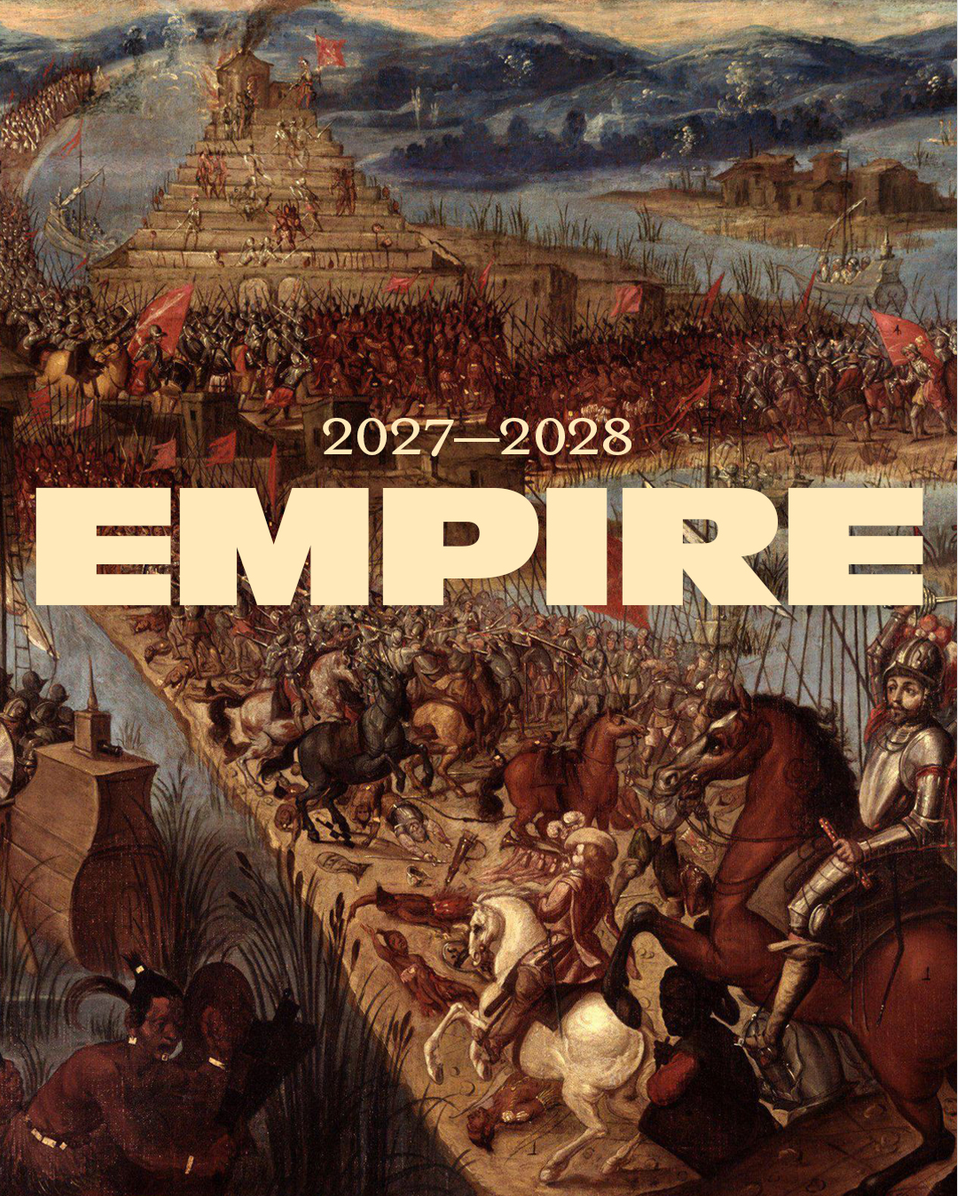 | | Andrew W. Mellon Postdoctoral Fellowship in the Humanities
Wolf Humanities Center
University of Pennsylvania
The Wolf Humanities Center awards five (5) one-year Andrew W. Mellon Postdoctoral Fellowships each academic year to scholars in the humanities who are no more than five years out of their doctorate. Preference will be given to candidates not yet in tenure track positions whose proposals are interdisciplinary and would particularly benefit from and contribute to Penn's intellectual life.
The programs of the Wolf Humanities Center are conceived through yearly topics that invite broad interdisciplinary collaboration. For the 2027–2028 academic year, our topic will be Empire.
During their appointment, Wolf Humanities Center's Postdoctoral Fellows teach one course rostered in one or more of the humanities departments or programs in Penn's College of Arts & Sciences and participate in the Center's weekly Mellon Research Seminar (Tuesdays, 12:00–2:00). Fellows also collaborate on the planning of a public symposium on the Center's annual topic, participate in professional development workshops, and are appointed a faculty mentor.
Application Deadline: November 1, 2026 (11:59 Eastern Time)
| | | |