Vol. 75, September 2026
Have you published something new in Global Urban History? Are you hosting a conference, workshop, or event? We'd like our members to know!
GUHP is a member-supported organization.
| Call for Papers for GUHP3 Mexico: Layered Cities
and
Call for Applications for the 2026-27 Cohort of GUHP Emerging Scholars | GUHP is very excited to invite scholars to propose presentations for our third in-person conference, GUHP3 Mexico City with the theme Layered Cities: Scale and Time in Global Urban History. The conference will take place on June 21-22, 2027 at the Instituto de Investigaciones Históricas at UNAM in Mexico City.
In addition we are also pleased to welcome new applications for the 2026-27 cohort of the GUHP Emerging Scholars Program, which is designed to prepare early career scholars for high-impact participation in the conference.
The deadline for applications is October 16, 2026 at 23:50 UCT.
Information on applications can be found here. | | Savage: The Making of Modern Dogs in British Hong Kong
By Catherine S. Chan
(Cornell University Press, 2026)
Savage explores the dark side of colonial modernity through canine eyes, showing the many ways that dogs involuntarily contributed to the modernization of twentieth-century Hong Kong. Catherine S. Chan follows the piecemeal transplantation of British animal humanitarianism as pedigree dogs accompanied hardening class differences, dogmeat became a contested racial issue, and dogs were roped into the long list of undesirables fabricated in the so-called golden era of reforms following the social disturbances of the 1960s.
| | | | The Capitalist Era: The Making—and Unmaking—of the Global Mind
By Jeremy Adelman
(Princeton University Press, 2026)
In The Capitalist Era, leading global historian Jeremy Adelman puts the world’s current unwinding in much-needed historical perspective. Combining political, economic, intellectual, and environmental history, the book tells the epic story of the forces that, since the late eighteenth century, have transformed the world into a single but fractured survival unit that is integrated by exchange and flow, yet divided by suspicion and fear. It is a story of hopes for universal peace, panic over planetary destruction, and debates, policies, and media that have shaped how people view one another across distances and borders.
| | | Forum on Pirates & Piracy in World History
World History Connected (Fall 2026)
Vol. 23, no. 1 (Fall 2026) features a wide-ranging forum, Pirates & Piracy in World History, that explores pirates and piracy across regions, eras, and classrooms. From maritime Asia and early-modern China to Viking-age Scandinavia, Hawai‘i during the First World War, and the Atlantic world of Anne Bonny and Mary Read, contributors examine how piracy has been defined, remembered, contested, and taught. The issue also includes new articles on global urban history and history-education resources.
| | | | Privatizing excrement: the management of organic waste and the cesspit companies in the late nineteenth-century Italian cities
By Manuel Vaquero Piñeiro, Luciano Maffi and Omar Mazzotti
Urban History (September 2026)
During the second half of the nineteenth century, traditional urban organic waste collection systems proved inadequate. In Italian cities, the alternative solution was found in the more hygienic system of ‘mobile sewers’. After its appearance in Milan in 1862, this system spread to many other urban centres on the peninsula. It encouraged the introduction of regulations for city cleaning and the emergence of private companies specializing in the use of mobile sewers and the transformation of organic waste into fertilizer or other by-products for sale. This article aims to investigate this evolutionary process prior to the construction of modern sewerage systems.
| | | | WORKSHOP INVITATION: Historical Flows, Digital Tools: Digital Humanities and the Respatialization of History
University of Neuchatel
October 30, 2026
Since the 2000s, spatial history has increasingly been associated with GIS-driven, data-intensive research. In the context of our FNS project, Sea-Border and Air-Space Formation in the Interwar Middle East: A Trans-Imperial Perspective, we aim to study the formation and effects of interwar maritime and airspace borders. By constructing a database that assembles underutilized archives, such as sea and air travel tickets and cargo manifests, we aim to analyze the evolution of maritime and air circulation of people and goods through ports and airports.
| | | | The 13th AISU Congress: The wounded city. Urban Spaces as Sites of Conflict, Life, and Memory
Genoa, Italy
September 7-10, 2027
Cities have always been more than merely settings for human events—often marked by conflicts of varying intensity. They are themselves among the most sensitive and enduring outcomes of those events and conflicts. Urban transformations bear the material and symbolic traces of the tensions that have traversed them: wounds produced by armed conflicts, political and social crises, natural disasters, and processes of exploitation or exclusion, as well as by projects of reform, reconstruction, and refoundation.
Call Deadline: October 18, 2026 | | | | LSA 2027 - The 11th Annual LSA Conference: (Re)generation in African Studies: Scholarship, Pedagogy, and Activism
Lagos, Nigeria
June 15-19, 2027
We invite participants to reflect on what (re)generation means in the diverse and diversely located fields of African studies. We encourage presentations that reflect on how shifting questions and practices (or epistemological, pedagogical, ideological crises) serve as a force of (re)generation in African studies. We welcome submissions that grapple with (re)generation as the propellant of new ways of knowing, of intellectual activism, and of a new beginning, that draws inspiration from the old or the past.
Abstract Deadline: December 1, 2026 | | | | 2027 Global Asias Summer Institute — “Global Asias’ Cold War: Cartographies of Intimacy”
Pennsylvania, USA
June 14-18, 2027
The 2027 Global Asias Summer Institute will be held June 14-18, 2027. SI2027, co-directed by Shuang Shen, Jooyeon Rhee, and Tina Chen, adopts Global Asias’ approach of “relational nonalignment” to consider the previously invisible, forcefully concealed, less studied, yet culturally far-reaching sites of coordination and connection in the histories of Cold War at the intersection of imperialist expansion and domination, postcolonial nationalism, migration, and diaspora. Institute participants spend a week reading and thinking about the annual theme, as well as significant time workshopping their work in progress.
Application Deadline: November 6, 2026 | | | | EURA 2027 Conference: "Centres, Margins and the Future of Territory: Reconfiguring Urban Governance"
Aveiro, Portugal
June 17-19 2027
The EURA 2027 international conference will mark the 30th anniversary of the European Urban Research Association. Hosted by the University of Aveiro and co-organised with the University of Palermo, the conference will invite critical reflection on the spatial reconfiguration of power, governance and meaning, with particular attention to the relations between centres and margins, territorial inequalities, marginalisation, rescaling and the future of urban and regional studies.
Call for papers and pre-organised panels will be announced soon.
More information will be available soon on the official EURA 2027 conference website! | | | Calls for Papers & Proposals | CFP: Liberalism, Blackness, and Labor Regimes In Post-Slavery Worlds
2027 World Congress of Sociology
Gwangju, Korea
July 4-10, 2027
The abolition of racial slavery in the nineteenth century aligned with universal liberal norms of human freedom and equality but did not merely fulfill those norms. Processes of slaves’ emancipation resulted instead in the reconstitution of racial hierarchies and subjugation constraining or impeding the self-determination of newly freed or colonized Black populations. The labor contract and production systems it structured within globalizing capitalism were key sites of renewed racialized domination to the extent that, when applied to blackness, laboring status was shaped by institutions that prevented actual political citizenship and social inclusion. Liberal ideas and modes of governance were therefore adapted to the task of combining normative universality with practical modalities of racial domination. Blackness thus confronted what Saidiya Hartman called “the afterlife of slavery.” This session will discuss the continuing subordination of formerly enslaved and newly colonized Black and Afro-descended populations within the labor regimes—intended as articulations of employment systems, accumulation patterns, laws, and ideas—of the post-abolition world. The session will also focus on how governments, experts, and social actors conceptualized, enforced, and institutionalized the racial subordination of post-slavery blackness in settler colonialism and evolving modalities of plantation or extractive capitalism.
| CFP: World History Association’s 2027 Annual Conference "Living in Interesting Times: Inflection Points in World History"
Pittsburgh, Pennsylvania, USA
June 27-29, 2027
The World History Association’s 2027 Annual Conference in Pittsburgh, Pennsylvania, USA will be organized around the theme of inflection points past and present. Inflection points help us to conceptualize the movement from one historical state to another: the neolithic or agricultural revolution, the development of the bureaucratic state, the rise of industrialization. Every inflection point exists in reference to a defined scale and scope of historical analysis. Some signal epistemic shifts, such as the development of writing, the Chinese civil service exam, or the printing press. Others mark pivots in transregional power, such as the decline of classical empires or World War II. Still others emerge through interdisciplinary research and allow us to theorize significant climate-influenced developments, such as the depopulation of Classical Maya highland cities or the rise of the Dutch maritime empire. Those of most relevance to world history represent interrelated shifts that reverberate across and between societies. Some posited inflection points may be mirages, or more limited than proposed, but often they do mark unfolding sequences of interconnected changes. Discussing and debating them can help us to understand the world in which we live.
Deadline for Proposal Submissions: Monday, October 19, 2026
| CFP: Critical Digital Archives: Travel, Translation, Transformation; A Hybrid Symposium on Archives in and from the SWANA Region
London, United Kingdom
January 20-21, 2027
This symposium aims to provide a forum for scholars, archivists, community and cultural organizations interested in critical approaches to digital archives containing materials from and about the SWANA (Southwest Asia and North Africa) region. In this space, archives have been historically imposed, looted, extracted, dispersed, destroyed, but also rescued, rebuilt and reinvented, pioneering practices of resistance, reparation and return that raise compelling ethical, theoretical and practical questions for scholars and stakeholders (Carbajal and Caswell, 2021; Ghaddar, 2025). We are interested in digitisation as a transformative process that reshapes archival practices, knowledge production, and power relations. The symposium invites participants to engage in discussion around three interconnected themes and interpretative lenses.
Deadline for Submissions: September 30, 2026
| CFP: Seeking World History Scholars for The Bloomsbury Handbook of Transecology
A decade after Nicole Seymour's chapter “Trans Ecology and the Transgender Road Narrative” in The Oxford Handbook of Ecocriticism, following Susan Stryker’s foreword to the 2020 book Transecology: Transgender Perspectives on Environment and Nature, and after TSQ: Transgender Studies Quarterly’s November 2024 issue on trans* ecologies, which built on the Queer and Trans* Ecologies (QTE) Interdisciplinary Initiative symposium that drew more than six hundred participants, transecology as a field needs a comprehensive reference handbook. The Bloomsbury Handbook of Transecology will be the first such volume: covering 38 topics, organized across four sections moving outward in scale from the molecular body to the deep-time planet. See the full list of topics with descriptions at the end of this CFP. Readers may be especially interested in Topic 37: Transecological Thought and the Naming of the Epoch and Topic 15: Non-Anglophone and Global South Transecologies. The debate over naming the current epoch, and the distinctive question of who counts as the anthropos, speaks directly to world history's own interest in periodization schemes that claim to describe humanity as a whole. Non-Anglophone transecological thought models exactly the kind of globally distributed, non-Western-centered scholarship world history increasingly aims to practice rather than merely describe.
Abstract Submission Deadline: November 15, 2026 | CFP: Fighting Pandemics from Below. New Diplomatic Histories of Global North-South Public Health Cooperation
Utrecht University
September 30– October 1, 2027
During the COVID-19 pandemic, the inadequacy of health cooperation between the so-called global north and south had dire and lethal consequences for humanity. The rapid spread of the disease, alarming death rates and governments’ unilateral agendas led to repeated calls from health experts for collaborative action across the globe. Instead, the world has witnessed heightened geopolitical rivalries, reproduction of Orientalist binaries and vaccine inequity that deprioritize health as a global public good. Today, health practitioners and scholars across disciplines agree that building new coordination mechanisms and, by this means, strengthening the capacity of local community groups in lower-income countries is crucial to stamp out communicable diseases. While these appeals are in line with the mantra of humanitarian efforts since the World Humanitarian Summit of 2016, ‘as local as possible, as international as necessary’, there is still limited consensus as to how we can induce and sustain localised sanitary internationalism. With these pressing issues in mind, we would like to invite historians of diplomacy, medicine, IR, empires, and other related fields to turn to the guidance of the past.
Deadline for proposals: November 30, 2026
| CFP: Infrastructural Actors and Activism in Contemporary History
Potsdam, Germany
June 9-11, 2027
The conference at ZZF Potsdam will examine how different types of infrastructural actors (system builders, service and maintenance personnel, users, and activists) created and transformed the mobility, energy, digital, and communication infrastructures, which were essential for the creation of contemporary, highly mobile societies.
Deadline for proposals: October 9, 2026
| CFP: Workshop "Urban Unrest, Dissent, and Violence in the Mediterranean (c. 1700-1918)"
Middle East Technical University, Ankara, Turkey
April 14-15, 2027
The Mediterranean region—encompassing the Adriatic Sea, the Balkans, the Black Sea, the Aegean, North Africa, and the Middle East—has long served as a pivotal nexus for cultural, economic, and political exchange. It remains a dynamic arena for urban transformation, shaped by recurrent crises and political contention. Contemporary scholarship in urban and Mediterranean studies underscores how urban unrest—manifesting as protests, social movements, spatial conflicts, and governance challenges—reveals entrenched socioeconomic disparities, rapid urbanization, migration pressures, and complex sociopolitical tensions. The quotidian experiences of inhabitants in Mediterranean cities are embedded in ongoing struggles over access to public space, housing, employment, and urban justice, reflecting broader discourses on urban resilience and participatory governance. This workshop seeks to critically examine the multifaceted phenomenon of unrest across Mediterranean urban centers, with an acute focus on underlying causes, varied expressions, and the sociopolitical ramifications of urban dissent and violence, emphasizing interactions among marginalized groups, migrant communities, youth, and political elites within contested urban landscapes.
Submission Deadline: October 15, 2026 | Fellowships, Grants, & Awards | 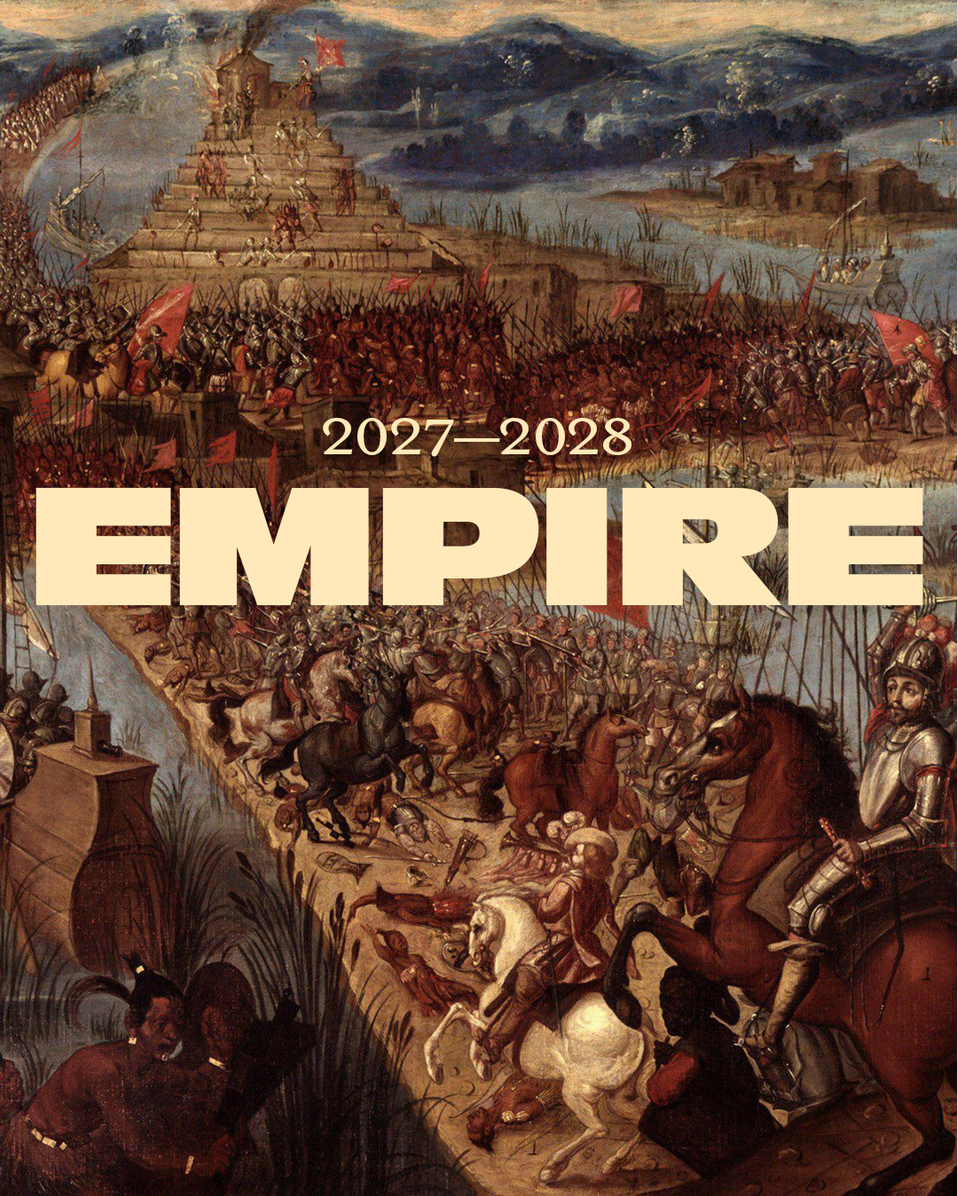 | | Andrew W. Mellon Postdoctoral Fellowship in the Humanities
Wolf Humanities Center
University of Pennsylvania
The Wolf Humanities Center awards five (5) one-year Andrew W. Mellon Postdoctoral Fellowships each academic year to scholars in the humanities who are no more than five years out of their doctorate. Preference will be given to candidates not yet in tenure track positions whose proposals are interdisciplinary and would particularly benefit from and contribute to Penn's intellectual life.
The programs of the Wolf Humanities Center are conceived through yearly topics that invite broad interdisciplinary collaboration. For the 2027–2028 academic year, our topic will be Empire.
During their appointment, Wolf Humanities Center's Postdoctoral Fellows teach one course rostered in one or more of the humanities departments or programs in Penn's College of Arts & Sciences and participate in the Center's weekly Mellon Research Seminar (Tuesdays, 12:00–2:00). Fellows also collaborate on the planning of a public symposium on the Center's annual topic, participate in professional development workshops, and are appointed a faculty mentor.
Application Deadline: November 1, 2026 (11:59 Eastern Time)
| | | |