Vol. 72, November 2025
Have you published something new in Global Urban History? Are you hosting a conference, workshop, or event? We'd like our members to know!
GUHP is a member-supported organization.
| Member Spotlight:
Two Special Issues of Urban History | Special Urban History Journal Issue
In case you missed last month’s announcement, we want to repeat the very good news that two special issues associated with GUHP have appeared in Urban History.
Bridgeheads and Breakwaters: The Socio-Environmental History of Port Cities after the Global Turn is edited by Michael Goebel, Christian Jones, Yorim Spoelder, and Xinge Zhai, and features contributions from GUHP members Michael Yeo, Lucia Carminati, Adrián Lerner Patrón, Guadalupe García, Cyrus Schayegh, Anindita Ghosh, and Ademide Adelusi-Adeluyi.
View the Special Issue Here
You can read an article about the making of the Special Issue by Christian Jones on our blog. Please pass these links on to your students and consider using them in classes. | Special Urban History Journal Issue
Empires and Cities, edited by Cyrus Schayegh, includes articles by GUHP members Dries Lyna, Michael Thornton, Taoyu Yang, Anna Ross, and Stephen Legg.
|
The Moving Word: How the West African and Caribbean Press Shaped Black Political Thought, 1935-1960
By Leslie James
(Harvard University Press, 2025)
In the 1930s and 1940s, amid intensifying anticolonial activism across the British Empire, dozens of new West African and Caribbean newspapers printed their first issues. With small staffs and shoestring budgets, these newspapers nonetheless became powerful vehicles for the expression of Black political thought. Drawing on papers from Trinidad, Jamaica, Ghana, and Nigeria, Leslie James shows how the press on both sides of the Atlantic nourished anticolonial and antiracist movements. Editors with varying levels of education, men and women journalists, worker and peasant correspondents, and anonymous contributors voiced incisive critiques of empire and experimented with visions of Black freedom. But as independence loomed, the press transformed to better demonstrate the respectability expected of a self-governing people....[more]
| | | | The West African City: Urban Spaces and Models and Urban Planning
By Jérôme Chenal
(University of Chicago Press, 2022)
Rapid growth, unmanageable cities, urban crisis, macrocephali... The cities of west Africa are no longer ‘plannable’ – at least not using traditional urban development tools. Without negating the importance of participatory processes in city creation, it nonetheless seems crucial to return to city plans and models, to what cities convey, and how they are built. But to understand the city in all its depth and richness, we must also hit the streets. The West African City proposes a dual perspective. At the urban scale, it analyses historical trajectories, spatial development, and urban planning documents to highlight the major trends beyond the plans. At the second level – that of public space – the street is discussed as the city’s lifeblood...[more]
| | | 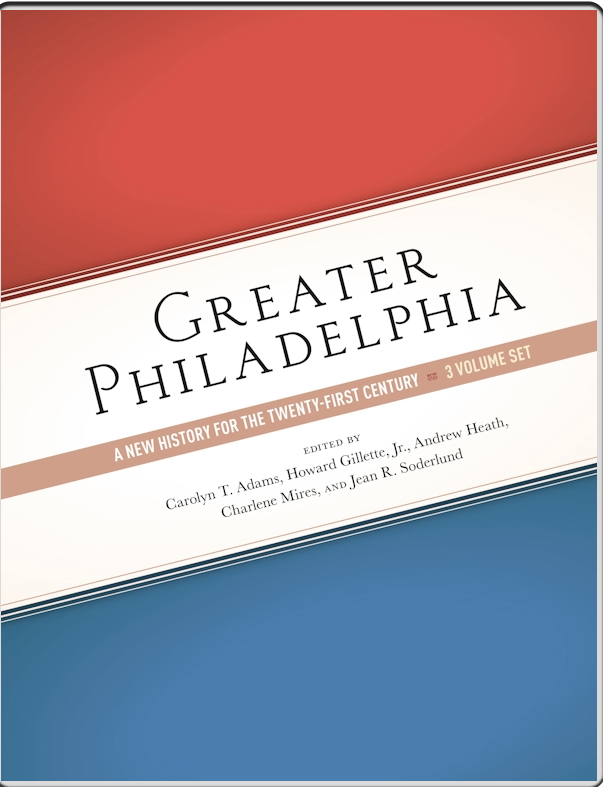 | | Greater Philadelphia: A New History for the Twenty-First Century, Three-Volume Set
Edited by Carolyn T. Adams, Howard Gillette Jr., Andrew Heath, Charlene Mires, Jean R. Soderlund
(University of Pennsylvania Press, 2025)
Now available from Penn Press, a landmark book project celebrates Philadelphia’s role as the beating heart of the nation’s story, unearthing the hidden histories, points of pride, people, places, and communities in the city and region we all love. Informed by current scholarship and richly illustrated with full-color photographs and maps, Greater Philadelphia: A New History for the Twenty-First Century brings to the public an up-to-date, diverse history of Philadelphia across its many dimensions. The project’s three volumes—The Greater Philadelphia Region, Greater Philadelphia and the Nation, and Greater Philadelphia and the World—offer fresh, engaging, and inclusive retellings of our region’s history from leading scholars and local voices. This is Philly as you’ve never read it: complex, interconnected, and globally relevant....[more] | | | 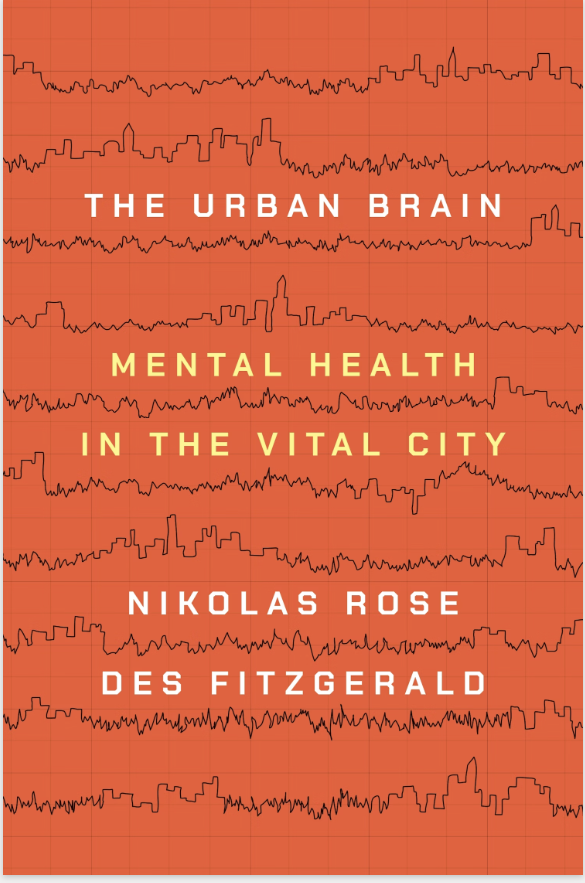 | | The Urban Brain: Mental Health in the Vital City
By Nikolas Rose and Des Fitzgerald
(Princeton University Press, 2022)
Most of the world’s people now live in cities and millions have moved from the countryside to the rapidly growing megacities of the global south. How does the urban experience shape the mental lives of those living in and moving to cities today? Sociologists study cities as centers of personal progress and social innovation, but also exclusion, racism, and inequality. Psychiatrists try to explain the high rates of mental disorders among urban dwellers, especially migrants. But the split between the social and life sciences has hindered understanding of how urban experience is written into the bodies and brains of urbanites. In The Urban Brain, Nikolas Rose and Des Fitzgerald seek to revive the collaboration between sociology and psychiatry about these critical questions. Reexamining the relationship between the city and the brain, Rose and Fitzgerald explore the ways cities shape the mental health and illness of those who inhabit them....[more] | | |  | | Civilizing the Colonial Soundscape: Space and the Regulation of Chinese Street Noise in Nineteenth-Century Hong Kong
By L. Nicole Vaughan
Urban History (November 2025)
In 1872, Hong Kong’s colonial government passed an ordinance prohibiting hawkers from crying wares in the parts of town where Europeans lived and worked. This was precipitated by a local discourse on ostensibly Chinese noise that took shape in the English-language newspapers that constructed Chinese people as intrinsically noisy and Europeans as noise averse. These ideas drew upon existing rhetoric produced in response to noise nuisance in London and a broader transatlantic discourse on the relationship between noise and civilization. The transformation of these ideas in Hong Kong established a model whereby Chinese people were producers of noise, unaffected by hearing it, while intrinsically quiet Europeans suffered from hearing noise. This process justified the differential treatment of space, enabling the creation of a privileged ‘European’ zone legally protected from ‘Chinese’ noise...[more]
| | |  | | A Room in the Film Capital: The Social Economy of Lodging and Urban Change in Hollywood during the 1930s
By Frederick Bode
Journal of Urban History (September 2025)
In Central Hollywood, during the 1930s, population became denser, housing values declined, and rooming houses increasingly defined much of the neighborhood. The lodging population was mostly white and native-born (but with significant Asian minorities), young, transient, and maritally unattached. They constituted a working class that was often precariously employed in the entertainment industry, the service sector, and other unskilled or semi-skilled occupations. The rooming houses and residential hotels provided the possibility of housing for the unemployed, the poorly paid, the temporary resident, and the elderly. Lodgers formed part of a socially diverse population in a neighborhood that offered opportunities for employment, services, and entertainment, usually within walking distance. During a decade when migration to Los Angeles was still considerable, rooming houses provided a flexibility in housing possibilities that would decline after the Second World War...[more]
| | |  | |
Streets of Memory: Urban Practices of Civil Antimafia Resistance
By Giuseppe Muti and Gianluigi Salvucci
Political Geography (August 2024)
In this article, the authors present data from the first dedicated census of commemorative antimafia street names in Italian cities, investigating streets named after innocent victims of the mafia as “lieux de memoire”. We introduce the concept of social amnesia surrounding the mafia to cast light on the impact of mafia violence on socio-spatial relationships and potential societal responses to this trauma. The practice of naming streets to commemorate the antimafia movement is a strategy for countering social amnesia. Antimafia street names are forms of urban resistance and civic education, and as such may be defined as a “common good”. Nonetheless, antimafia street naming can also be a primarily formal or acritical memory practice or – potentially – an expedient for legitimizing illegal relations. This kind of ambiguity is inherent in mafia studies and attests to the ongoing urban conflict between the mafia and the antimafia movement....[more] | | | | Workshop: "The Middle East and the Making of Global Anti-imperialism: Histories of the Twentieth Century"
Finnish Institute in the Middle East, Beirut
December 5-6, 2025
This workshop brings together scholars working at the intersections of modern Middle Eastern history, anti-imperialism, and internationalism in the twentieth century. Sessions will explore how movements and actors from the Arab Middle East both shaped and were shaped by global anti-imperialist projects—from the League Against Imperialism and the Spanish Civil War to Bandung, the Palestinian Revolution, and Arab–Soviet connections. Participants will present full-length, pre-circulated papers to be considered for a special journal issue, with discussions probing questions of multiple anti-imperialisms, the relationship between anti-imperialism and internationalism, and the entanglements of anti-imperialism and authoritarianism in the Cold War and post–Arab Spring eras...[more]
| | | | Conference: "Becoming Local? Forgotten Lineages of Displaced Communities Across the Indian Ocean World, 1650-1860"
Universiteit Leiden, The Netherlands
December 10-11, 2025
Join GUHP-member Dries Lyna and colleagues for a two-day conference exploring how displaced communities across the Indian Ocean world forged new forms of belonging under slavery, forced labor, and banishment. Through a series of papers tracing microhistories from Cape Town to Colombo, Manila, and Batavia/Jakarta, speakers examine how individuals and families navigated forgetting, reinvention, and the gradual making of “local” identities across generations. Keynotes will be delivered by Sue Peabody (Washington State University) and Jennifer L. Gaynor (University at Buffalo, SUNY). All are warmly invited to attend the public lectures at Universiteit Leiden on both days...[more]
| | | | Seminar Series: "Imperial Entanglements Project Seminars"
Scuola Superiore Meridionale, Naples (Hybrid)
15 November & 16 December, 2025
Join the Imperial Entanglements team for a pair of seminars featuring Professor Sebastian Conrad (Freie Universität Berlin) and Dr. Zülâl Muslu (Tilburg University). Both sessions will be held at the Scuola Superiore Meridionale in Naples and offered in a hybrid format.
On 15 November, Sebastian Conrad will discuss German Colonialism in a Global Age 11:00–13:00 CET (5:00–7:00 a.m. EST). On 16 December, Zülâl Muslu will present Newcomer Empires, Old Devices: The Ottoman Mixed Courts as a Matrix for Asia 11:00 CET (5:00 a.m. EST). Zoom links and further details are available on the project website...[more]
| | | | Workshop: "Rethinking Gender in Inter- and Transimperial Contexts"
University of Freiburg, Germany
January 16-17, 2026
This two-day workshop brings together approaches that move beyond the metropole–periphery framework to examine how gender functioned in inter- and transimperial contexts. How did actors from different empires use gendered codes and behaviors in their interactions, and to what ends? Did they adopt certain gendered logics to gain recognition as imperial peers? In what ways did gender serve as a threshold for legitimacy and agency? Through such questions, the workshop highlights gender as a constitutive element of imperial power and identity—shaped by, and shaping, interactions across and beyond individual empires...[more]
| | |  | | Workshop: "Cities and Decolonization: Anti-colonial Struggles, Urban Protest, and Global Solidarities"
Oxford, UK
March 19-20, 2026
The aim of the workshop is to reassess the relationship between the city and the struggle for decolonization in the colonial world. It brings together scholars examining anti-colonial movements in specific urban contexts in the twentieth century. The workshop seeks to foster dialogue on the relationship between anti-colonial protests and colonial cities in Africa and Asia, exploring how these struggles were shaped by diverse social groups, the spatial organization of urban environments, and the tensions between competing visions of anti-colonial practice. What role did cities play in shaping the dynamics of twentieth-century decolonization? This question continues to captivate scholars across disciplines. Contemporaries perceived revolutionary movements as originating from urban hubs and radiating outward into rural regions. Aristide Zolberg evocatively characterized anti-colonial movements as “creatures with a relatively large head in the capital and fairly rudimentary limbs.”[1] In contrast, postcolonial thinkers like Frantz Fanon, significantly influenced by Marxist scholarship, insisted that “the peasants alone are revolutionary.”[2] Historian Raymond Betts proposed a nuanced interpretation, suggesting anti-colonial movements were simultaneously “rooted in the countryside and grounded in the city...[more]
| | | Calls for Papers & Proposals |
CFP: 21st Biennial Conference of the International Planning History Society (IPHS)
International Planning History Society Conference 2026: Atlanta Crossroads
Georgia Institute of Technology/University of Georgia
What does planning history mean today? Who speaks it, writes it, sings it, paints it—and for whom? Sir Peter Hall once suggested that planning history served primarily to counter the short institutional memories of planning bodies. Today, the field increasingly pushes beyond those boundaries, exploring broader, more inclusive narratives of governance that intersect public, private, and civil sectors. IPHS 2026 invites scholars from across the globe to share and debate these evolving perspectives through papers, plenaries, roundtables, and more. Coming just after Atlanta helps host the 2026 FIFA World Cup, the conference will feature keynote addresses, scholarly sessions, mobile city tours, shared meals, and informal exchanges—making it a true “World Cup” of planning history scholarship...[more]
|
CFP: Session "Good Governance and Urban Conflict in Late Medieval and Early Modern Cities in Europe and Beyond"
EAUH Conference, Barcelona, Spain
September 2-5, 2026
Session organizers: Cédric David Napolitano (Utrecht University), Àngel Casals (Universitat de Barcelona), Minne De Boodt (UCLouvain and KU Leuven Universities), Darko Darovec (Institure IRRIS, Marezige, Slovenia)
This session proposes a critical examination of principles of good governance in the world of city politics, juxtaposed with the practices that fostered and managed conflict within urban environments. It aims to bring together specialists from different fields for an integrated and globally informed discussion of good governance and urban conflict across cities in Europe, the Middle East and Asia (13th-17th centuries). What made for “”good governance”” in Medieval and Early Modern cities? More than the promotion of specific institutional forms, it was its success in managing a diverse community that truly defined effective governance. Citizens, for example, articulated sophisticated ideas about justice or the common good. They crafted elaborate guidelines for urban governors, experimented with various forms of associative life, and reshaped urban space, all in an attempt to realize good urban governance...[more]
Submission deadline: October 22, 2025
|
CFP: Roundtable "Shaping Global Urbanization: Expert Networks in the Mid-Twentieth Century"
EAUH Conference, Barcelona, Spain
September 2-5, 2026
Session organizers: Cédric Feriel (University Rennes 2, Société Française d’Histoire Urbaine), Rosemary Wakeman (Fordham University, New York)
When is it possible to speak of global expertise and a network of experts dealing with global urbanization? This session will examine the importance of the mid-20th-century turning point on this question, based on wartime and postwar, reconstruction, urban crisis and planning, colonial/postcolonial, resource extraction and environmental issues.
We will consider:
- Life trajectories and careers of experts. How many of the experts on “global urbanization” after 1945 began their careers in colonial administration? How many came from European or transatlantic city networks? Many were also deeply involved in urban issues in their own countries. How did they combine these two scales in their practices and projects?
- Continuity and renewal of issues. While the issues on the international agenda changed significantly after 1945 (state building, urban crisis and planning, resource extraction and environment), can we trace the continuity of solutions proposed before the war?...[more]
Submission deadline: October 22, 2025
|
CFA: Session "Making Cities Visible. Global Perspectives on Urban Image-Production and Circulation (19th -20th centuries)"
EAUH Conference, Barcelona, Spain
September 2-5, 2026
Session organizers: Christina Reimann (University of Gothenburg), Malte Zierenberg (Humboldt-University Berlin)
Since the age of printmaking and boosted by photography, cities have been hubs for producing and distributing images locally and globally. This panel explores the urban imprint of the making of a ‘society of images’ by examining international visual discourses and local peculiarities, and by challenging Western-centric views on urban modernity...[more]
Submission deadline: October 22, 2025
|
CFA: Session "Rethinking modern urban infrastructures in the light of the Anthropocene (19th/21th century)"
EAUH Conference, Barcelona, Spain
September 2-5, 2026
Session organizers: Christoph Bernhardt (HU Berlin) and Nathalie Roseau (ENPC, LATTS Paris)
The contribution, over the last three centuries, of urbanization processes (technical, social, economic, political, cultural) to the “Anthropocene” - that is to say, the alteration of the biosphere by human activities, which is showing dramatic consequences for the planetary environmental boundaries – calls for a rethinking of approaches and subfields of urban history through the prism of the Anthropocene. Although the term “Anthropocene” is contested in public and scientific debates, the transdisciplinary controversies on this issue over the past two decades can help to reformulate research questions to urban history and to innovate established concepts in urban political, cultural and environmental history. In this perspective, the session focuses on urban infrastructures, and invites to reexamine the
emergence and ecological footprint of urban networks (water, mobility, energy, waste, data, etc.) in their spatial and material scales, their socio-political configurations, and their human and non-human agencies. Contributions, grounded in empirical research, are expected to promote the interference of the fields of urban history and Anthropocene issues....[more]
Submission deadline: October 22, 2025
|
CFA: Session "Knowledge in Interurban Transit. Networks, Actors, and Agencies"
EAUH Conference, Barcelona, Spain
September 2-5, 2026
Session organizers: Heidi Hein-Kircher (Herne/Bochum) and Oliver Hochadel (Barcelona)
The urban space of the modern city was characterized by a high concentration of short-distance relations, multi-directional exchanges within and the acceleration of movement and communication. This session focusses on interurban knowledge exchange and its networks. The “densification” within the city and the numerous social challenges were instrumental for the development of new fields of “applied urban knowledge” such as urban planning, hygiene and cultural infrastructures so that the inherent dynamic of the urban space and the production of applied urban knowledge entered a dialectic relationship. Hence, knowledge became key for urban development. Disregarding national borders, urban reformers in different cities became increasingly aware that they were facing similar problems with respect to public health and urban planning. Many city councils reached out to other cities all over Europe or even globally in order to modernize their own city. Such solutions were sought after in the form of “best practices” from other urban contexts, which were considered as “recipes for success”. This distinctly pragmatic approach also promised to avoid errors that had been committed elsewhere, while being “late” or “backward” might turn out to be advantageous, and could be used by reformers rhetorically as political leverage to demand new technologies or urban planning concepts. Urban knowledge was permanently altered, combined, hybridized and adapted to fit the specific needs and circumstances of a city...[more]
Submission deadline: October 22, 2025 | Fellowships, Grants, & Awards | | Slavery Archive Book Prize 2025
The #Slaveryarchive Book Prize recognizes an outstanding book on the history of the Atlantic slave trade and slavery exploring any dimension, period, and geographical area, published in any country in English, French, Portuguese, or Spanish. Books with copyright dates between January 1, 2025, and December 31, 2025 are eligible. Edited books and new editions of books previously published will not be considered. The deadline for submissions is February 15, 2026. Three finalists will be announced in September 2026 and the winner will be announced in October 2026...[more]
Application deadline: February 15, 2026
| | | |